


Thank you! Your submission has been received!
Oops! Something went wrong while submitting the form.
August 31, 2025

Stimulus control therapy has emerged as a crucial solution for individuals grappling with the widespread issue of insomnia, a condition that affects millions globally. This behavioral intervention is designed to reshape the associations individuals have with their sleep environment, leading to significant improvements in sleep quality and overall well-being. Yet, as many embark on this journey toward better sleep, they may face various challenges that could impede their progress.
How can one effectively navigate these obstacles and fully leverage the benefits of stimulus control therapy for a more restorative night's rest?
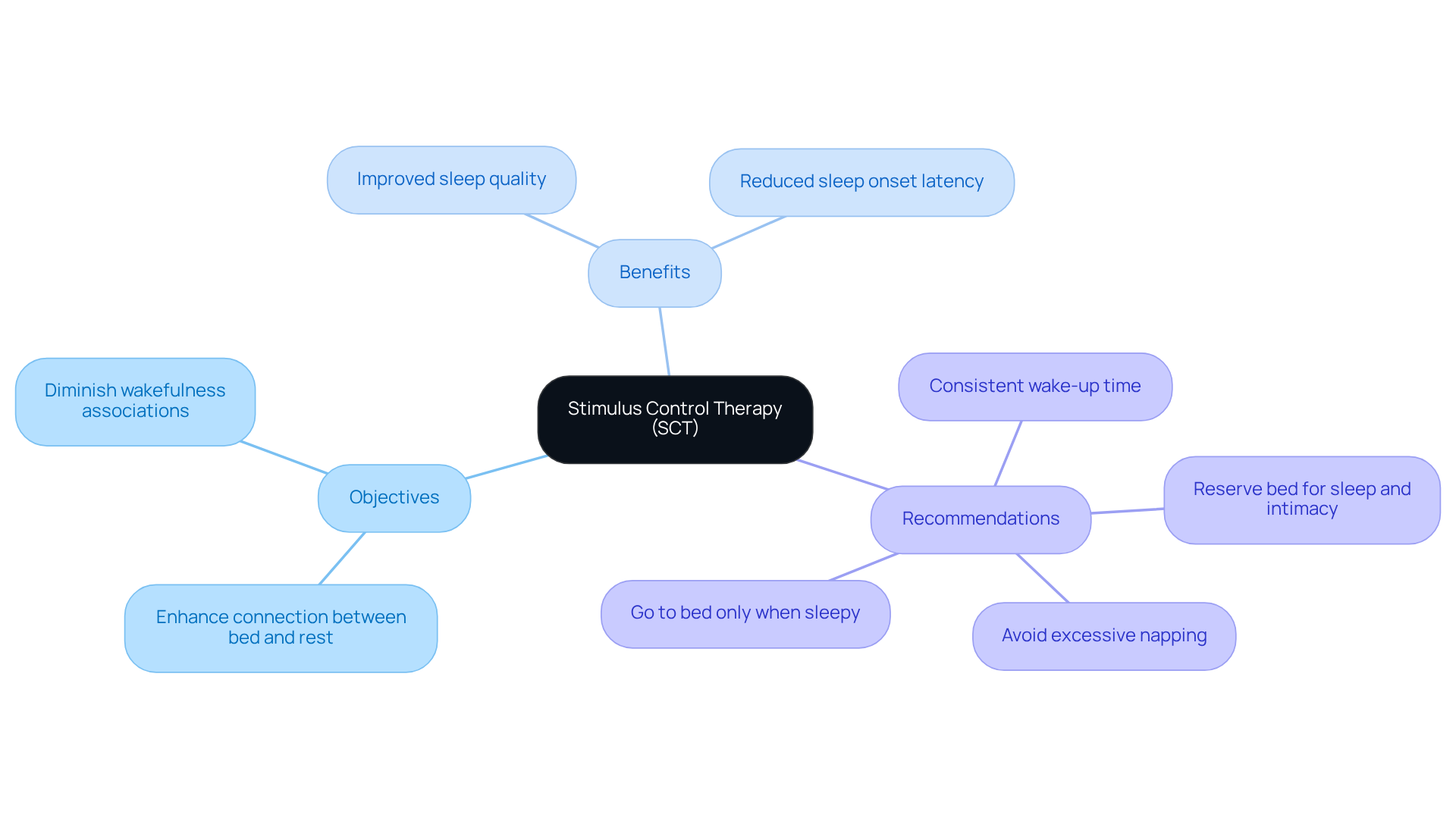
is a focused behavioral intervention designed to alleviate insomnia by reshaping individuals' associations with sleep-related stimuli. The primary objective of is to enhance the connection between the bed and rest, while simultaneously diminishing associations linked to wakefulness.
is particularly beneficial for those struggling with both the initiation and maintenance of sleep, as it fosters the development of a consistent resting environment and schedule. Research underscores that (SCT) can significantly improve sleep outcomes, with studies revealing that individuals who adhere to principles experience reduced sleep onset latency and enhanced overall sleep quality.
For instance, patients engaging in SCT are advised to reserve the bed exclusively for sleep and intimacy, thereby retraining their brains to associate the bed with calming activities. This method not only aids in creating a conducive environment for rest but also reinforces . Experts advocate for as an integral component of (CBT-I), emphasizing its critical role in addressing conditioned arousal and . Individuals experiencing are typically recommended to undergo .
To optimize the circadian rhythm that regulates sleep and alertness, individuals are encouraged to . Furthermore, it is vital to distinguish between fatigue and drowsiness; while fatigue indicates a need for rest, drowsiness signifies readiness for sleep. The benefits of extend beyond immediate sleep improvements; they include long-term enhancements in sleep patterns and overall well-being. By promoting a disciplined approach to sleep, individuals can achieve a more restorative sleep cycle, ultimately resulting in better health outcomes. As the incidence of insomnia continues to escalate, understanding and applying strategies such as becomes increasingly crucial for effective .
Chronic insomnia affects 6% to 10% of adults, with even higher rates among those with comorbid conditions. This alarming statistic underscores the pressing need for , including . SCT is grounded in behavioral psychology and the principles of classical conditioning, aiming to transform the bed into a strong signal for rest rather than alertness.
Key components of SCT include:
By consistently applying these strategies, individuals can effectively retrain their brains to associate the bed with rest, alleviating insomnia symptoms and enhancing overall rest management. Research studies have indicated that significantly improve rest outcomes, demonstrating the effectiveness of in promoting better hygiene and management related to sleep.
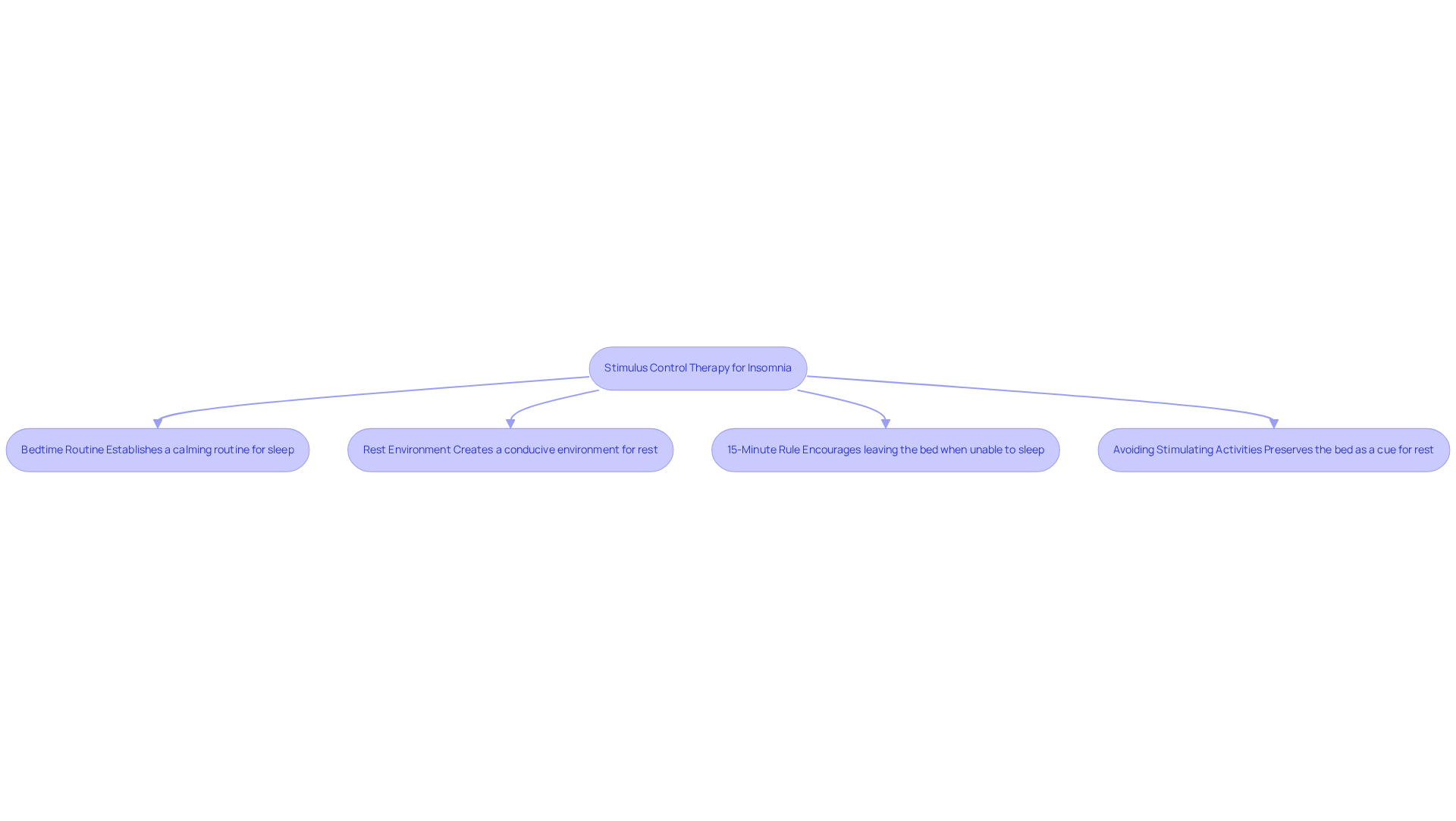
To effectively implement (SCT) for better , consider the following strategies:
By incorporating these strategies into your daily routine, you can enhance the effectiveness of and significantly improve your overall .

Applying can significantly improve . However, individuals frequently encounter various challenges. Consider the following common obstacles and to overcome them:
By recognizing these challenges and implementing , individuals can enhance their success with , which leads to improved sleep management.

Stimulus control therapy (SCT) is a crucial intervention for individuals facing insomnia, designed to transform the relationship between sleep environments and restful sleep. By forging a robust connection between the bed and relaxation, SCT not only facilitates easier sleep onset but also promotes long-term enhancements in sleep quality. With the rising prevalence of insomnia, the necessity of grasping and applying effective strategies like SCT becomes increasingly apparent.
The key components of SCT—such as maintaining a consistent sleep schedule, creating an optimal rest environment, and following a soothing pre-sleep routine—are instrumental in improving sleep management. Additionally, tackling common hurdles—such as sleep-related anxiety and environmental distractions—can significantly amplify the efficacy of this therapy. By integrating these practical strategies, individuals can successfully retrain their minds and bodies to adopt a more restorative sleep cycle.
Ultimately, mastering stimulus control therapy transcends the pursuit of better sleep; it is about enhancing overall well-being. As the journey toward improved sleep quality progresses, individuals are urged to remain patient and persistent. By prioritizing sleep hygiene and consistently applying SCT principles, a pathway to healthier sleep patterns and an enriched quality of life can be realized.
What is stimulus control therapy?
Stimulus control therapy is a behavioral intervention designed to alleviate insomnia by reshaping individuals' associations with sleep-related stimuli, enhancing the connection between the bed and rest while reducing associations linked to wakefulness.
Who can benefit from stimulus control therapy?
Stimulus control therapy is particularly beneficial for individuals struggling with both the initiation and maintenance of sleep, especially those experiencing insomnia that persists for three months or longer.
How does stimulus control therapy improve sleep?
Research indicates that individuals who adhere to stimulus control therapy principles experience reduced sleep onset latency and enhanced overall sleep quality by creating a consistent resting environment and schedule.
What practices are recommended in stimulus control therapy?
Patients are advised to reserve the bed exclusively for sleep and intimacy, retraining their brains to associate the bed with calming activities, which helps reinforce positive sleep habits.
How does stimulus control therapy relate to Cognitive Behavioral Therapy for Insomnia (CBT-I)?
Experts advocate for stimulus control therapy as an integral component of CBT-I, emphasizing its role in addressing conditioned arousal and enhancing sleep hygiene.
What is the importance of establishing a consistent morning wake-up time?
Establishing a consistent morning wake-up time helps optimize the circadian rhythm that regulates sleep and alertness.
What is the difference between fatigue and drowsiness?
Fatigue indicates a need for rest, while drowsiness signifies readiness for sleep.
What are the long-term benefits of stimulus control therapy?
The benefits of stimulus control therapy extend beyond immediate sleep improvements to include long-term enhancements in sleep patterns and overall well-being, leading to a more restorative sleep cycle and better health outcomes.
Our expert recruitment strategies and AI-driven sourcing ensure that you receive top-notch candidates quickly, without compromising on quality. Whether you’re looking for BCBAs, Clinical Directors, or RBTs, we’ve got you covered.


