


Thank you! Your submission has been received!
Oops! Something went wrong while submitting the form.
March 18, 2026

The landscape of behavioral health is witnessing an unprecedented surge in demand for Registered Behavior Technicians (RBTs). With this profession gaining significant traction, it’s crucial for aspiring technicians to grasp the essential qualifications and requirements that lead to success.
What steps must candidates take to not only meet but exceed the expectations set by employers? This article explores the critical skills and training necessary to thrive in this competitive field, addressing the pressing needs of today’s hiring landscape.
Are you prepared to navigate these challenges and elevate your career in behavioral health?
Did you know that the demand for is on the rise? To fulfill the , individuals must complete a comprehensive that covers the principles of Applied Behavior Analysis (ABA), ethical considerations, and practical skills to become an RBT. This training is primarily offered by BACB-approved providers, which are essential for ensuring the quality and effectiveness of the education received.
Candidates have the , including online, in-person, or hybrid options, making it easier to fit training into their schedules. Selecting a reputable training provider is crucial, as it significantly impacts the fulfillment of for success in the field. For instance, the stands at 83%. However, this figure has seen a decline from 84% in 2020 to 73% in 2024, highlighting the importance of .
Moreover, Chris Larson has noted that wages for registered behavioral technicians have increased, intensifying competition for talent in relation to in the marketplace. Organizations advocating for improved reimbursement rates are addressing workforce challenges, further underscoring the need for skilled behavior technicians in a competitive job market. As the demand for qualified professionals continues to grow, the established by training providers become a pivotal factor in shaping the future of aspiring RBTs.
Are you facing challenges in hiring qualified RBTs? Consider how partnering with a reliable training provider can help you secure the talent you need to thrive in this evolving landscape.

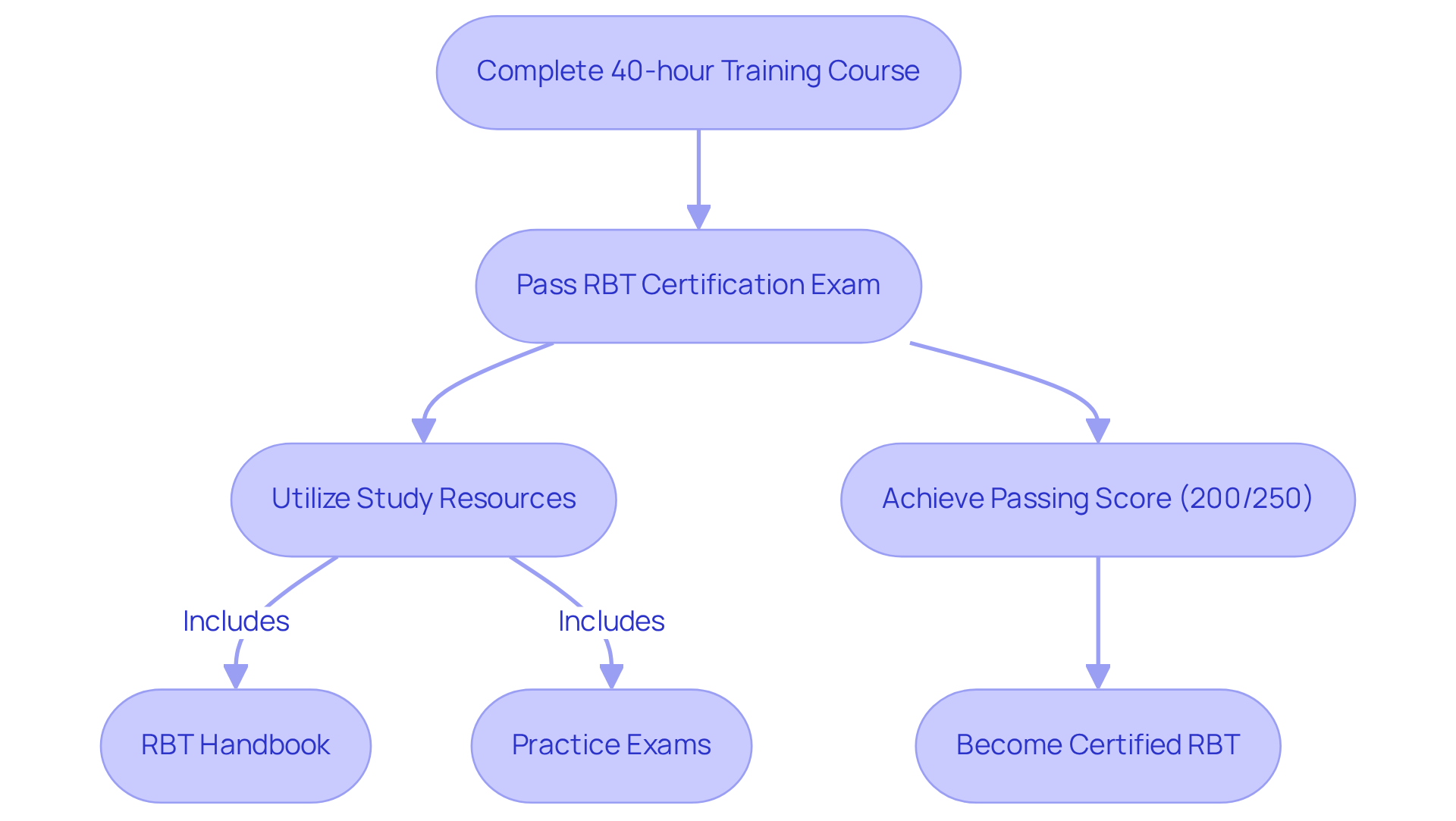
To become a , individuals must first complete a and pass the administered by Pearson VUE. Did you know that the demand for BCBAs is skyrocketing? This makes the role of an RBT more crucial than ever. The exam consists of 85 multiple-choice questions that assess knowledge across various domains of . Given the competitive nature of the exam, thorough preparation is essential.
Candidates are strongly encouraged to utilize a variety of study resources, including:
These tools have been shown to significantly improve success rates. For instance, , with effective study strategies playing a crucial role in these outcomes. To meet the , a is required to obtain certification, which is mandatory for anyone aspiring to work as an RBT.
Success stories from participants highlight the effectiveness of . This reinforces the idea that a well-prepared individual is more likely to excel on the exam. Additionally, managing time effectively during the exam is crucial, as candidates have 90 minutes to complete the 85 questions. Are you ready to take the next step in your career? Prepare thoroughly, and you’ll be well on your way to success.
The demand for Board Certified Behavior Analysts (BCBAs) is on the rise, with a staggering 82,681 individuals newly certified as (RBTs) in 2025. This statistic underscores the critical need for , which must encompass at least 5% of RBTs' total service hours each month. Such supervision is not just a compliance requirement; it’s essential for fostering (ABA).
To fulfill behavioral technician requirements, must actively engage in , to stay abreast of best practices and advancements in ABA. A significant percentage of RBTs pursue ongoing to enhance their skills and service delivery. With a pass rate of 75% for candidates, this is vital for maintaining certification and improving therapeutic outcomes.
Programs that emphasize practical skills, ethical conduct, and teamwork are particularly beneficial. They equip RBTs with the necessary tools to navigate the complexities of their roles. However, it’s concerning that 20% of surveyed employers expressed dissatisfaction with the skills and knowledge of graduates from certain training organizations. This highlights the urgent need for for .
As the field continues to expand, the focus on will be crucial in ensuring that provide high-quality care and support to individuals with Autism Spectrum Disorder (ASD). Are you facing challenges in hiring qualified professionals? Consider how can help you find the right talent to meet your needs.

The stands as a pivotal evaluation, executed by a qualified BCBA or BCaBA, that zeroes in on a candidate's practical skills in . This assessment involves direct observation of crucial tasks, including data collection, intervention implementation, and the maintenance of client dignity. Candidates must demonstrate proficiency in these areas to successfully complete the assessment, which is essential for certification.
Did you know that the median pass rate for is around 80.4%? This statistic underscores the necessity of . In fact, five reported first-time examination in 2023, showcasing the effectiveness of structured training.
BCBAs assert that a not only guarantees the quality of care provided but also amplifies the overall effectiveness of ABA interventions. As one expert noted, 'Strong exam performance often begins with training that is organized, clear, and easy to follow.'
Are you facing challenges in hiring qualified RBTs? Consider how structured training programs can enhance your recruitment efforts and ensure that your team meets the to provide exceptional care.

The (RBTs) is exceptionally bright. Did you know that employment in this field is projected to grow by approximately 14% from 2016 to 2026? This surge is largely due to the , especially for individuals with autism spectrum disorder (ASD). As awareness of ABA therapy's effectiveness spreads, RBTs are increasingly integrated into diverse environments such as schools, clinics, and private practices.
For instance, the U.S. Bureau of Labor Statistics reported a significant rise in job listings for behavior analysts, with 1,054 job postings in the U.S. as of 2020. This indicates a . Furthermore, the growing prevalence of autism diagnoses - currently affecting 1 in 44 children - underscores the urgent need for trained professionals in this field. Organizations are recognizing the essential role RBTs play in providing effective therapy, and the demand for their services is expected to remain robust.
Considering a career in behavioral health? The is around $39,000, with entry-level positions starting at approximately $35,000. This makes it a financially viable career choice. If you're facing , think about how can help you find the right candidates. With the , now is the time to act and secure the talent your organization needs.

Becoming a Registered Behavior Technician (RBT) involves various . The primary cost is the , depending on the provider. Additionally, candidates must pay a and a background check fee, usually between $40 and $80.
But that’s not all. Hidden costs can quickly add up, including study materials and travel expenses. For some, the total can reach around $700 when considering lost wages from unpaid time off for training and assessments. As Cody Carraro, a Clinical Consultant & In-House BCBA, points out, "Earning your is one of the most affordable ways to enter the behavioral health field."
To ease these , many employers offer sponsorship or reimbursement options for . It’s crucial for applicants to ask about available support before committing to these expenses. Understanding these can pave the way for a and a rewarding career in . Are you ready to take the next step in your professional journey?

Creating an is essential in today’s competitive job market. Did you know that the demand for is skyrocketing? This makes it crucial for candidates to stand out. To do so, individuals should highlight their education, training, and relevant experience in .
Start with a clear objective statement that outlines your career goals. Follow this with a detailed work history that showcases your specific skills related to behavior analysis. Remember, hiring managers are looking for candidates who can demonstrate their expertise effectively. A is equally important; it should express your enthusiasm for the role and reflect an understanding of the organization’s mission.
Utilizing action verbs and can significantly enhance the effectiveness of both your resume and cover letter. For instance, instead of saying you "helped" clients, say you "improved client outcomes by 30% through targeted interventions." This not only showcases your skills but also provides concrete evidence of your impact.
Are you facing challenges in crafting your application? Consider how can assist you in navigating this process. With the right tools and support, you can create a resume that not only meets industry standards but also . Don’t miss the opportunity to make a lasting impression!

To excel in , candidates must prioritize common questions that evaluate their grasp of principles, their experience with specific populations, and the practical scenarios they may face. Questions such as 'How do you handle challenging behaviors?' and 'What strategies do you use to ?' are typical and demand thoughtful responses. Practicing these answers can significantly boost candidates' ability to articulate their skills and experiences.
Demonstrating a solid understanding of the organization’s mission and values can distinguish candidates from their peers. Successful RBTs stress the importance of preparation, with many noting that they will serve is essential. For instance, one RBT mentioned that researching the organization’s approach to allowed them to tailor their responses effectively, showcasing their alignment with the organization's goals.
Statistics indicate that individuals who engage in report during actual interviews. Chris Larson, a Senior Reporter, highlights that " is a vital strategic issue for providers," underscoring the importance of well-prepared candidates in a competitive job market. By thoroughly preparing and articulating their knowledge of ABA and the organization, candidates can significantly enhance their chances of securing RBT positions.

Did you know that the demand for Board Certified Behavior Analysts (BCBAs) is skyrocketing? have multiple pathways for , particularly through certifications like the BCaBA and BCBA. Transitioning to typically requires:
This progression not only enhances responsibilities but also significantly boosts earning potential, with BCBAs earning an .
RBTs can also specialize in various areas, such as:
These specialties are increasingly in demand due to the rising prevalence of . Engaging in -is crucial for RBTs looking to enhance their skills and knowledge. Networking within the ABA community can further facilitate career growth, leading to leadership roles such as Lead RBT or Senior RBT, which offer additional responsibilities and a pay increase of 15-20% over base salaries.
Currently, about 22% of RBTs pursue , reflecting a strong interest in advancing their careers. Real-world examples show that many RBTs successfully transition to BCBA roles, expanding their impact on client care and intervention strategies. As the demand for qualified professionals in ABA continues to grow, RBTs who actively seek specialization and further education will find themselves well-positioned for rewarding careers in this vital field.
To enhance your career prospects, consider leveraging . By submitting your resume, you can receive tailored feedback on your experience and career goals, ensuring you are matched with the best roles. Our advanced job fit scoring identifies opportunities that align with your skills, preferences, and desired locations, optimizing your job matching process in the field of ABA therapy. Why wait? Take the next step in your career today!

Did you know that the demand for (BCBAs) is skyrocketing? As the ABA therapy sector continues to grow, so does the need for qualified professionals. stands out as a vital recruitment platform, expertly connecting BCBAs and (RBTs) with premier job opportunities.
Candidates can explore a diverse array of to their qualifications and career aspirations. But offers more than just . It provides invaluable resources like:
This comprehensive support equips individuals to navigate the competitive job market effectively.
Consider this: recent data shows that 82% of candidates who received contingent offers through moved forward in their hiring journey. This statistic highlights the platform's success in . BCBAs recognize the like in streamlining the hiring process, ultimately enhancing the quality of care provided in the field.
Are you facing challenges in your hiring process? By leveraging the resources available through , of securing fulfilling positions and advancing their careers in ABA therapy. Don't miss out on the opportunity to connect with the right job-take action today and explore what has to offer!

The demand for Registered Behavior Technicians (RBTs) is skyrocketing, with a significant increase in the need for skilled professionals in the field. This surge presents a unique opportunity for aspiring RBTs to establish a successful career. To thrive, candidates must navigate essential qualifications, including:
High-quality training and effective exam preparation are crucial components for RBT success. Ongoing supervision and professional development ensure that RBTs remain at the forefront of their field. The job outlook is promising, driven by the growing need for Applied Behavior Analysis (ABA) services, particularly for individuals with Autism Spectrum Disorder (ASD). Financial considerations, such as training costs and potential employer support, also play a vital role in the journey toward certification.
In this competitive job market, how can you enhance your career prospects as an RBT? Leveraging resources like Hire ABA can make a significant difference. By utilizing job placement services and professional development tools, candidates can effectively position themselves to meet the demands of the field. As the landscape of ABA continues to evolve, embracing these opportunities not only fosters personal growth but also elevates the quality of care provided to clients.
Take the initiative now. Invest in your training, preparation, and continuous learning. Embark on a rewarding career that makes a meaningful impact in the lives of others.
What is required to become a Registered Behavior Technician (RBT)?
To become an RBT, individuals must complete a comprehensive 40-hour training course covering the principles of Applied Behavior Analysis (ABA), ethical considerations, and practical skills. After completing the training, candidates must pass the RBT certification exam.
How does the RBT certification exam work?
The RBT certification exam, administered by Pearson VUE, consists of 85 multiple-choice questions that assess knowledge across various domains of ABA. A passing score of at least 200 out of 250 is required to obtain certification.
What is the current pass rate for first-time RBT candidates?
The pass rate for first-time RBT candidates is currently 79%, which highlights the importance of thorough preparation and effective study strategies.
What study resources are recommended for RBT exam preparation?
Recommended study resources include the RBT Handbook and practice exams, which can significantly improve success rates for candidates preparing for the exam.
What are the ongoing requirements for RBTs after certification?
After certification, RBTs must engage in ongoing supervision from qualified BCBAs or BCaBAs, covering at least 5% of their total service hours each month. They are also encouraged to participate in professional development activities, such as workshops and training sessions.
Why is professional development important for RBTs?
Professional development is crucial for RBTs to stay updated on best practices and advancements in ABA, enhance their skills, and improve therapeutic outcomes. Continuous learning helps maintain certification and ensures high-quality care.
What challenges are employers facing in hiring qualified RBTs?
Employers are facing challenges in hiring qualified RBTs, with 20% expressing dissatisfaction with the skills and knowledge of graduates from certain training organizations. This underscores the need for effective supervision and adherence to behavioral technician requirements.
How is the demand for RBTs and BCBAs changing?
The demand for RBTs is on the rise, with 82,681 individuals newly certified in 2025. Additionally, the demand for Board Certified Behavior Analysts (BCBAs) is also increasing, making the role of RBTs more crucial in the field of ABA.
Our expert recruitment strategies and AI-driven sourcing ensure that you receive top-notch candidates quickly, without compromising on quality. Whether you’re looking for BCBAs, Clinical Directors, or RBTs, we’ve got you covered.


