


Thank you! Your submission has been received!
Oops! Something went wrong while submitting the form.
March 4, 2026

Task chaining has emerged as a powerful approach in Applied Behavior Analysis (ABA) therapy, providing a structured method to teach essential skills across various domains. By breaking down complex tasks into manageable steps, this technique not only enhances learning outcomes but also fosters independence and confidence in individuals.
But how can practitioners effectively implement task chaining to maximize its benefits in daily living, social skills, academic performance, and beyond? This article explores ten practical examples of task chaining that illustrate its effectiveness in diverse settings. These insights are invaluable for therapists, educators, and caregivers alike, guiding them in harnessing the full potential of this transformative technique.
, including , dressing, and preparing meals. Consider the process of handwashing: it can be broken down into :
By teaching each phase in sequence, learners can master one element before moving on to the next, ensuring a of the .

Task chaining serves as a powerful method for teaching social skills by breaking down interactions into manageable stages. For example, when guiding a young person to greet someone, the process can be divided into key components:
Practicing each of these steps individually allows the young learner to master them before integrating them into a complete greeting. This approach not only enhances the individual's ability to engage socially but also through .
Current trends in underscore the importance of like sequence linking. By focusing on specific behaviors and reinforcing each step, young learners can cultivate essential skills in a supportive environment. An effective example for teaching social abilities includes where children rehearse greetings, sharing, and turn-taking in a controlled setting, gradually transitioning to real-life interactions.
Implementing task chaining effectively in social skills training requires consistent reinforcement and collaboration among parents, educators, and therapists. This teamwork ensures that young individuals receive support across various situations, enhancing their ability to apply learned skills. As children experience success in these interactions, they become more adept at navigating social situations, ultimately fostering greater independence and confidence in their daily lives.

In educational settings, significantly boosts learners' ability to excel in , particularly in mathematics. Consider this: when teaching addition, the process can be broken down into clear steps:
This sequential approach allows learners to master each component before progressing, fostering both confidence and competence.
Research indicates that linking activities not only enhances academic performance but also aids in skill retention. Educators have noted that using leads to better comprehension and application of concepts. One educator remarked, "Dividing assignments into manageable parts enables students to establish a strong foundation, making complex issues less daunting." The choice between can influence the effectiveness of . Forward sequencing guides learners from start to finish, while backward sequencing begins with the final action and works backward, catering to diverse learner needs.
To effectively implement , several crucial stages must be followed:
plays a vital role in motivating students and celebrating their achievements. By adhering to these principles, educators can effectively teach math skills through , ultimately leading to improved academic outcomes for students.

An example of serves as a powerful method in , breaking down complex behaviors into manageable, sequential actions. Consider the challenge of tantrums: a structured approach might involve three key actions:
Each step is reinforced through prompting and practice, allowing individuals to gradually master the entire sequence independently. This method not only fosters but also builds confidence, as children experience success at each stage.
Research shows that such strategies can significantly reduce . Professionals have observed that enhances retention and promotes self-sufficiency. As noted by Brightside ABA, "Linking techniques (forward, backward, total assignment) assist in teaching new skills," underscoring the effectiveness of skill linking in developing healthier coping strategies.
By employing task sequencing, therapists can effectively guide children toward , ultimately leading to improved behavior and emotional well-being. For instance, a case study focused on reducing tantrums in public settings revealed that by recognizing and disrupting the behavior chain, professionals could teach youth alternative methods to request items, resulting in more effective coping strategies.
Are you facing challenges in managing behaviors? Consider how the example can transform your approach and lead to lasting positive outcomes.

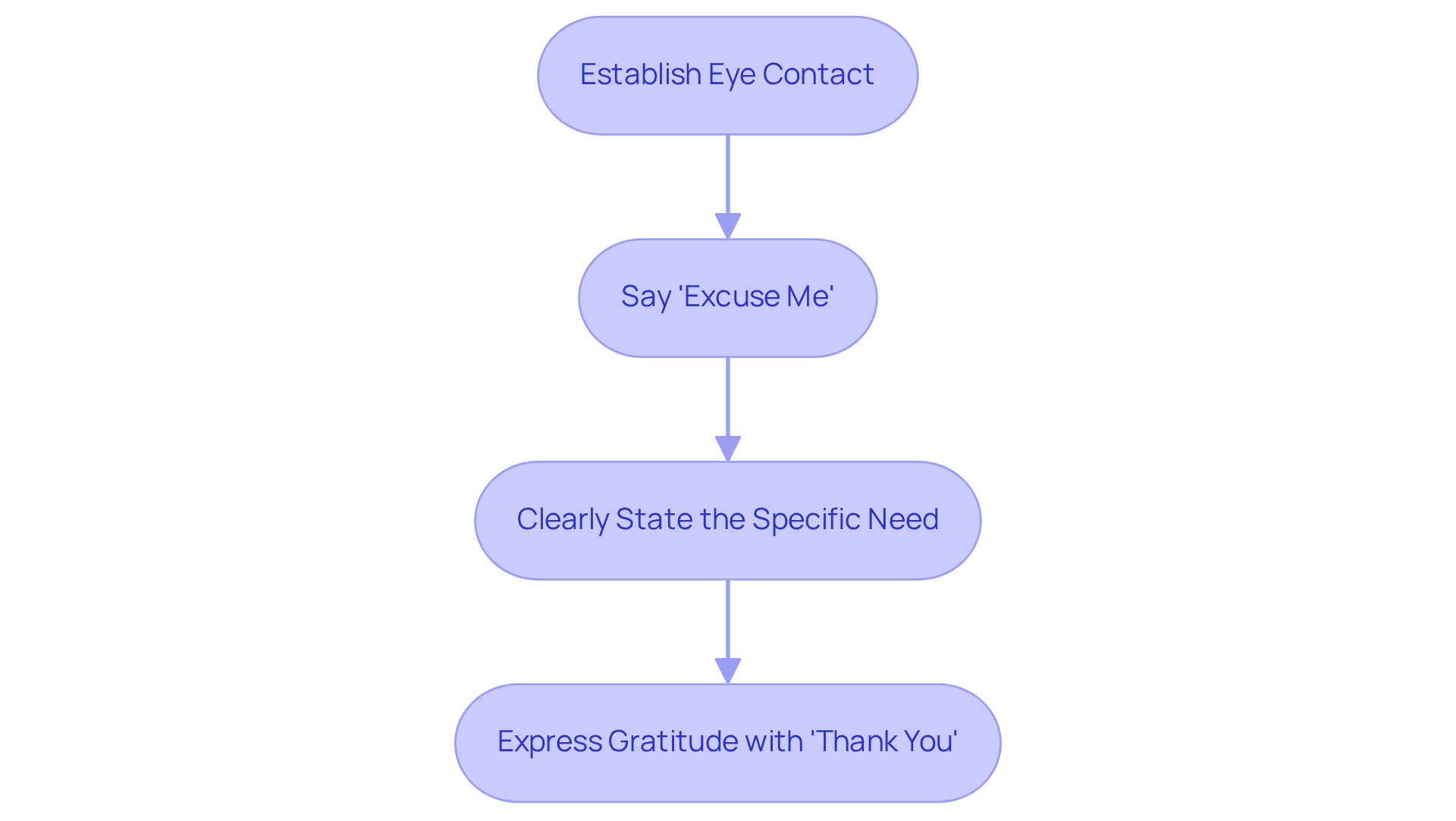
Task chaining serves as a powerful method to enhance by breaking down the of initiating and maintaining conversations. Consider this: when guiding a child to ask for help, the process can be segmented into distinct, manageable steps:
Practicing each of these steps individually allows the child to build confidence and ultimately engage in conversations independently.
As Nat Turner wisely noted, '' This structured approach not only but also empowers children to in social interactions, significantly enhancing their . It's essential to recognize that is a skill that can be learned, and
The stands out as a powerful method for teaching , like bathing and grooming, by breaking down complex tasks into manageable actions. Consider this when teaching a child to brush their teeth: the process can be divided into clear sequential actions:
In a , each step is taught individually, allowing the learner to master one before progressing to the next, which fosters .
The success of activity linking is evident in its outstanding outcomes. For instance, a study revealed that children engaged in a saw a remarkable 90% increase in over just three months. This approach is a that not only enhances a young person's ability to perform daily activities but also . A notable case involved a 10-year-old with autism who reduced self-injurious behavior by 90% through , underscoring the effectiveness of structured methods like .
Behavior analysts strongly advocate for this approach. One expert stated, " allows individuals to experience success at each step, reinforcing their ability to complete the entire routine independently." Another analyst emphasized, "Self-care is offering the world your best rather than what remains of you," highlighting the critical role of self-care in nurturing young people's confidence and . By using a with sequential activities, caregivers can effectively teach essential , leading to significant improvements in the quality of life for children with developmental challenges.

In , stands out as a powerful method for teaching skills. Consider this: how often do young individuals struggle with the nuances of ? By breaking down the process of playing a board game into manageable phases:
Therapists can effectively guide children through each step. This not only fosters a sense of achievement but also enhances their ability to engage with peers in a collaborative environment.
Each of these steps can be practiced individually, allowing young individuals to progressively enhance their and cooperation skills. By concentrating on each aspect of the game, therapists can assist youngsters in , ultimately leading to improved social dynamics and friendships. As Virginia Axline wisely noted, 'Play is a young person's natural medium for self-expression.' This highlights the critical role of play in therapeutic settings.
Moreover, employing a -from verbal assistance to less involved cues-can further support young learners as they acquire these essential skills. This comprehensive approach ensures that children are not only learning but thriving in their social environments. Are you ready to embrace the in your practice?

stands out as a powerful strategy for facilitating , breaking down processes into manageable phases. Consider the transition from playtime to mealtime:
By practicing each step individually, can better understand and anticipate , leading to smoother experiences.
This method not only alleviates anxiety associated with changes in activities but also , empowering children to . highlight that incorporating can significantly enhance this process, making it easier for young individuals to engage and follow along.
The effective application of activity sequences has shown , ultimately supporting their overall growth and adaptability in various environments. Are you ready to implement in your approach? Embrace this strategy to for .

In , task chaining stands out as a powerful method for teaching through structured activities. Consider this: when participating in a group project, the process can be broken down into manageable phases:
Each of these steps can be practiced individually, allowing participants to hone essential . As Helen Keller famously stated, "Alone we can do so little; together we can do so much," underscoring .
This method not only fosters teamwork but also of the group by ensuring that each member contributes meaningfully to the objective at hand. By employing activity linking, therapists can create an environment where children learn to collaborate, share responsibilities, and support one another. The result? and improved teamwork abilities.
A compelling illustrates this point. Organized interventions, including step-by-step approaches, significantly boosted his . This highlights the practical advantages of in cooperative skills training. Are you ready to explore how ?

Customized evaluations significantly enhance the efficiency of by pinpointing personal strengths and areas for improvement. Have you considered how tailored assessments can transform your hiring process? Through 's platform, practitioners can evaluate a child's current abilities and use a to customize strategies that match their developmental level. This personalized approach not only guarantees that each step is appropriate for the learner but also promotes .
For instance, a child learning to brush their teeth may thrive with a , which includes:
Such , as learners experience tangible success in mini-tasks. By leveraging , practitioners can cultivate a supportive learning environment that maximizes skill acquisition and autonomy for each child.
Are you ready to enhance your ? With , you can ensure that your is as effective as possible, leading to better outcomes for the children you serve.

Task chaining stands out as a powerful strategy in ABA therapy, effectively breaking down complex tasks into manageable steps that significantly enhance learning outcomes across various domains. This method allows practitioners to teach essential skills in daily living, social interactions, academic performance, behavior modification, communication, self-care, and therapeutic play. Each example underscores the effectiveness of sequential learning, enabling individuals to master skills incrementally and build confidence through tangible successes.
The diverse applications of task chaining highlight its effectiveness in supporting children’s development. From teaching social skills through structured greetings to facilitating smoother transitions between activities, task chaining offers a robust framework for fostering independence and competence. Personalized assessments further enhance this approach, ensuring strategies are tailored to meet each learner's unique needs and abilities.
Embracing task chaining not only empowers individuals to acquire vital skills but also cultivates a supportive environment that nurtures growth and independence. As practitioners and caregivers implement these techniques, they contribute to the overall well-being and development of children, paving the way for more successful interactions and an enhanced quality of life. The call to action is clear: consider how task chaining can be integrated into therapeutic practices to unlock the full potential of young learners and foster lasting positive change.
What is task chaining and how is it used in daily living skills?
Task chaining is a method for teaching essential daily living skills by breaking tasks into distinct actions. For example, handwashing can be divided into six steps: turning on the faucet, wetting hands, applying soap, scrubbing hands, rinsing, and drying. This allows learners to master each step before moving on to the next.
How can task chaining be applied to social skills development?
Task chaining can be used to teach social skills by breaking interactions into manageable stages. For instance, greeting someone can involve making eye contact, smiling, saying 'hello', and asking a question. Practicing each step individually helps learners master them before integrating them into a complete greeting.
What are the benefits of using task chaining in social skills training?
Task chaining enhances an individual's ability to engage socially and builds confidence through incremental successes. It allows for structured learning, which is important in social skills development, and supports learners in applying their skills in real-life interactions.
How can task chaining be implemented in academic learning environments?
In educational settings, task chaining can boost learners' abilities in multi-step procedures, such as mathematics. For example, teaching addition can be broken down into identifying numbers, writing them down, performing the addition, and recording the answer. This sequential approach helps learners build confidence and competence.
What research supports the use of task chaining in education?
Research indicates that linking activities enhances academic performance and aids in skill retention. Educators have observed that using sequential activities in math instruction leads to better comprehension and application of concepts.
What are the key stages for effectively implementing task chaining?
The key stages for implementing task chaining include conducting a skill analysis to identify each element of the task, using prompting techniques to support learners, and integrating positive reinforcement to encourage progress.
What is the difference between forward sequencing and backward sequencing in task chaining?
Forward sequencing guides learners from start to finish of a task, while backward sequencing begins with the final action and works backward. This approach caters to diverse learner needs and can influence the effectiveness of activity linking.
Our expert recruitment strategies and AI-driven sourcing ensure that you receive top-notch candidates quickly, without compromising on quality. Whether you’re looking for BCBAs, Clinical Directors, or RBTs, we’ve got you covered.


