


Thank you! Your submission has been received!
Oops! Something went wrong while submitting the form.
September 6, 2025

Empiricism stands as the cornerstone of Applied Behavior Analysis (ABA), fundamentally shaping practitioners' approaches to behavioral interventions through a focus on observable and measurable data.
By anchoring practices in empirical evidence, behavior analysts are equipped to develop strategies that are not only effective but also ethically sound, thereby fostering trust and accountability among clients.
Yet, a pressing question arises: how can practitioners ensure their methods remain adaptable and responsive to individual needs while upholding the rigorous standards of empiricism?
This exploration delves into the pivotal role of empiricism in ABA, underscoring its significance, applications, and the intricate connections it maintains with other foundational principles in the field.
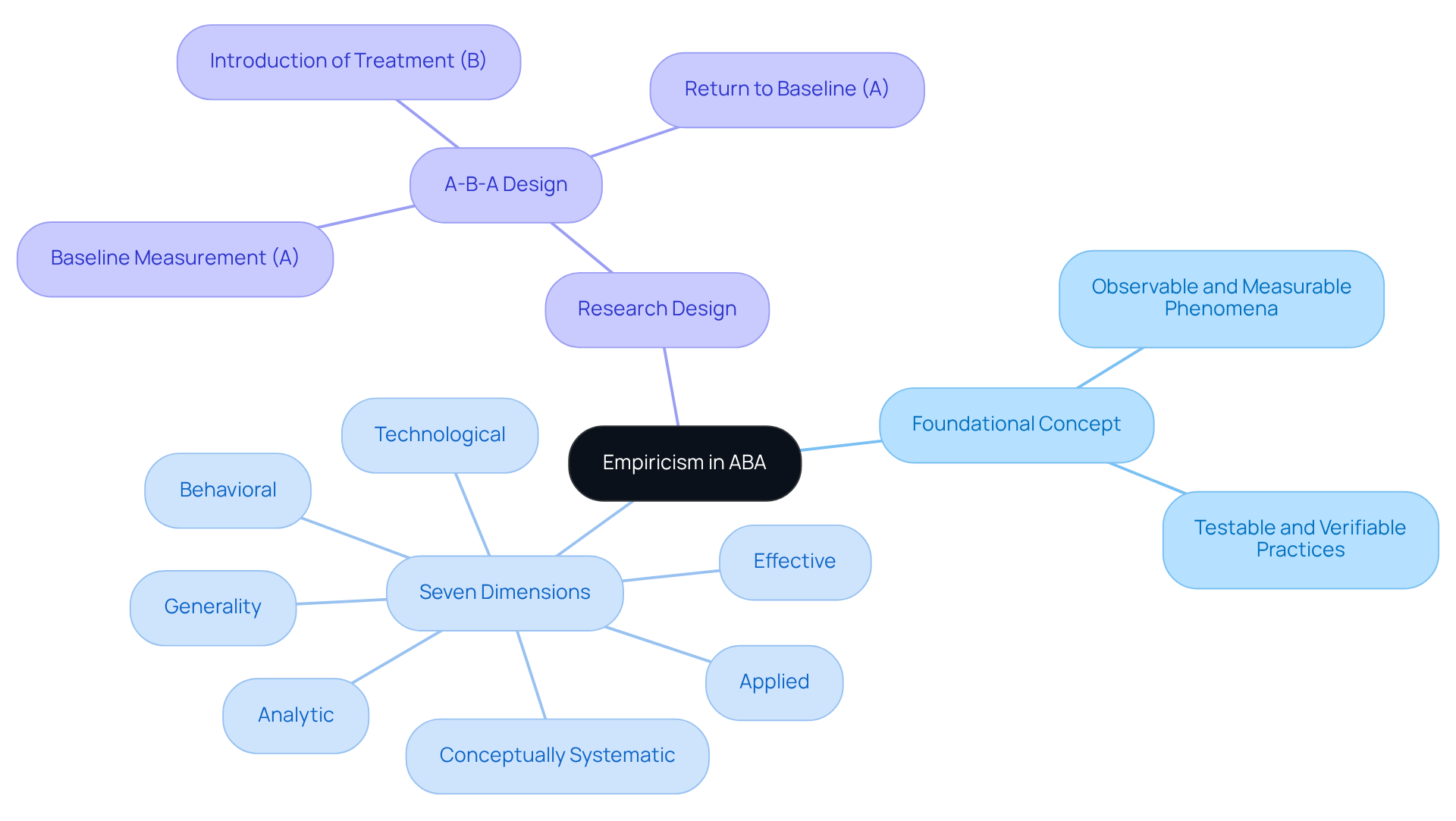
in Applied Behavior Analysis (ABA) stands as a foundational philosophical stance, asserting that knowledge is derived from observable and measurable phenomena. This principle emphasizes that conclusions and interventions must be grounded in direct observation and , reflecting the tenets of , rather than subjective opinions or assumptions. By prioritizing trustworthy information, [empiricism aba](https://besteveraba.com/blog/aba-research-methods) ensures that ABA practices are both testable and verifiable, which is crucial for effective analysis of actions.
The —applied, behavioral, analytic, technological, conceptually systematic, effective, and generality—illustrate how empiricism aba is intricately woven into ABA practices. For instance, when an analyst observes a child's actions in a classroom, they diligently gather information on specific behaviors. This guides tailored actions and strategies, showcasing how empiricism aba distinguishes itself from other philosophical frameworks in psychology and therapy.
Moreover, are vital in the context of empiricism aba for assessing strategies customized to specific behaviors, underscoring the importance of empirical evidence. The , which includes three key phases:
exemplifies the principles of empiricism aba in practice. The emphasis on not only enhances the reliability of empiricism aba methods but also fosters a structured understanding of behavioral change.
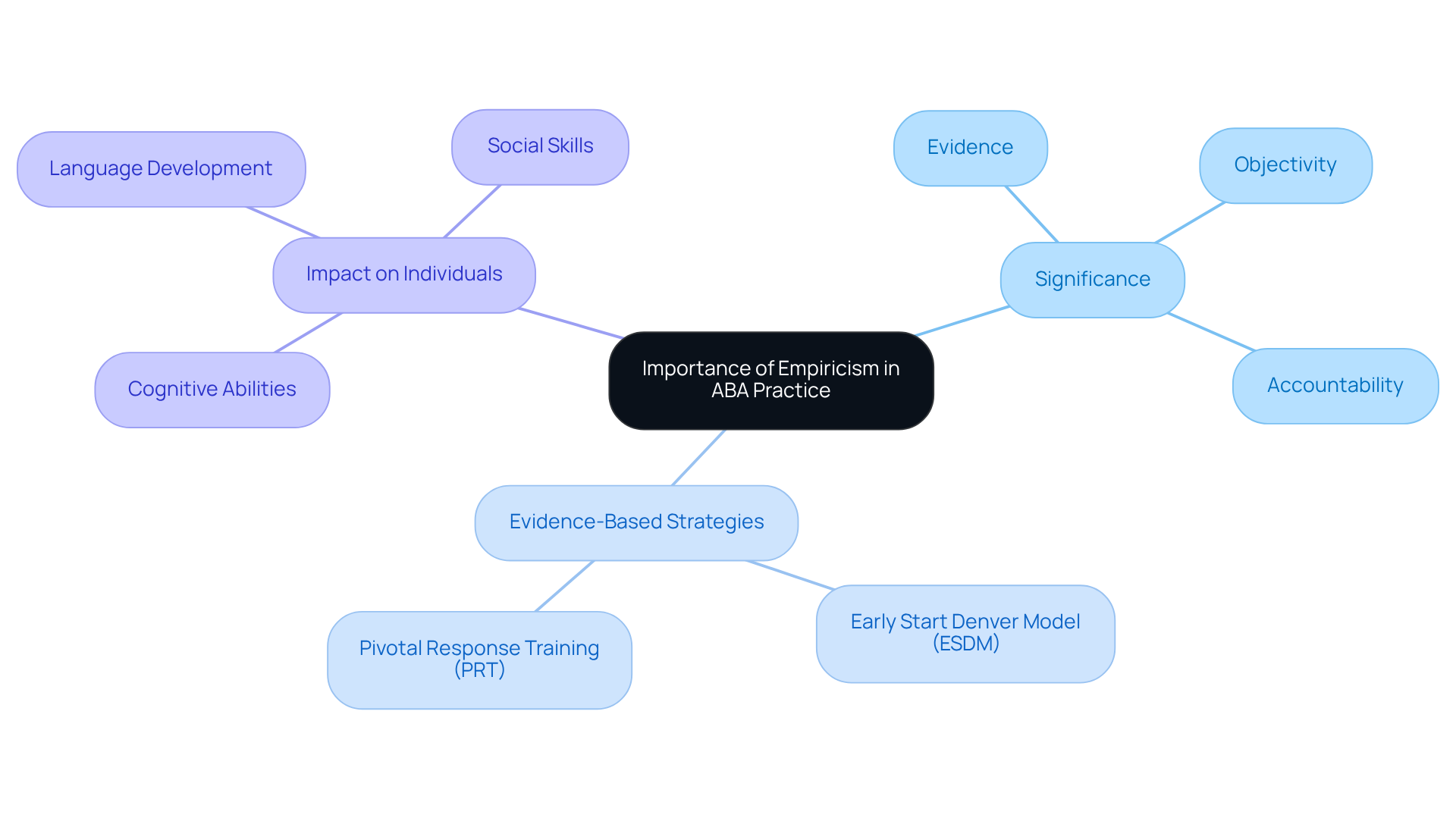
serves as the cornerstone of , ensuring that interventions are grounded in evidence, objectivity, and accountability. This reliance on empowers behavior analysts to make that drive . Such a foundation not only enhances the credibility of ABA as a scientific discipline but also cultivates .
For instance, when a behavior analyst introduces a , the effectiveness of that approach can be rigorously evaluated through , allowing for . This iterative process is essential for continuous improvement and aligns with the ethical standards of ABA practice, guaranteeing that methods are both effective and respectful of the individuals served.
, such as the Early Start Denver Model (ESDM) and Pivotal Response Training (PRT), exemplify how empiricism aba can lead to substantial advancements in cognitive abilities, language development, and social skills among individuals with autism. Research demonstrates that children receiving 20 hours of ESDM weekly achieve greater progress in cognitive assessments and adaptive skills compared to those undergoing typical community treatment. This evidence underscores the in enhancing the overall quality of life for individuals with autism and reinforces the commitment to ethical, effective, and personalized methodologies in ABA.
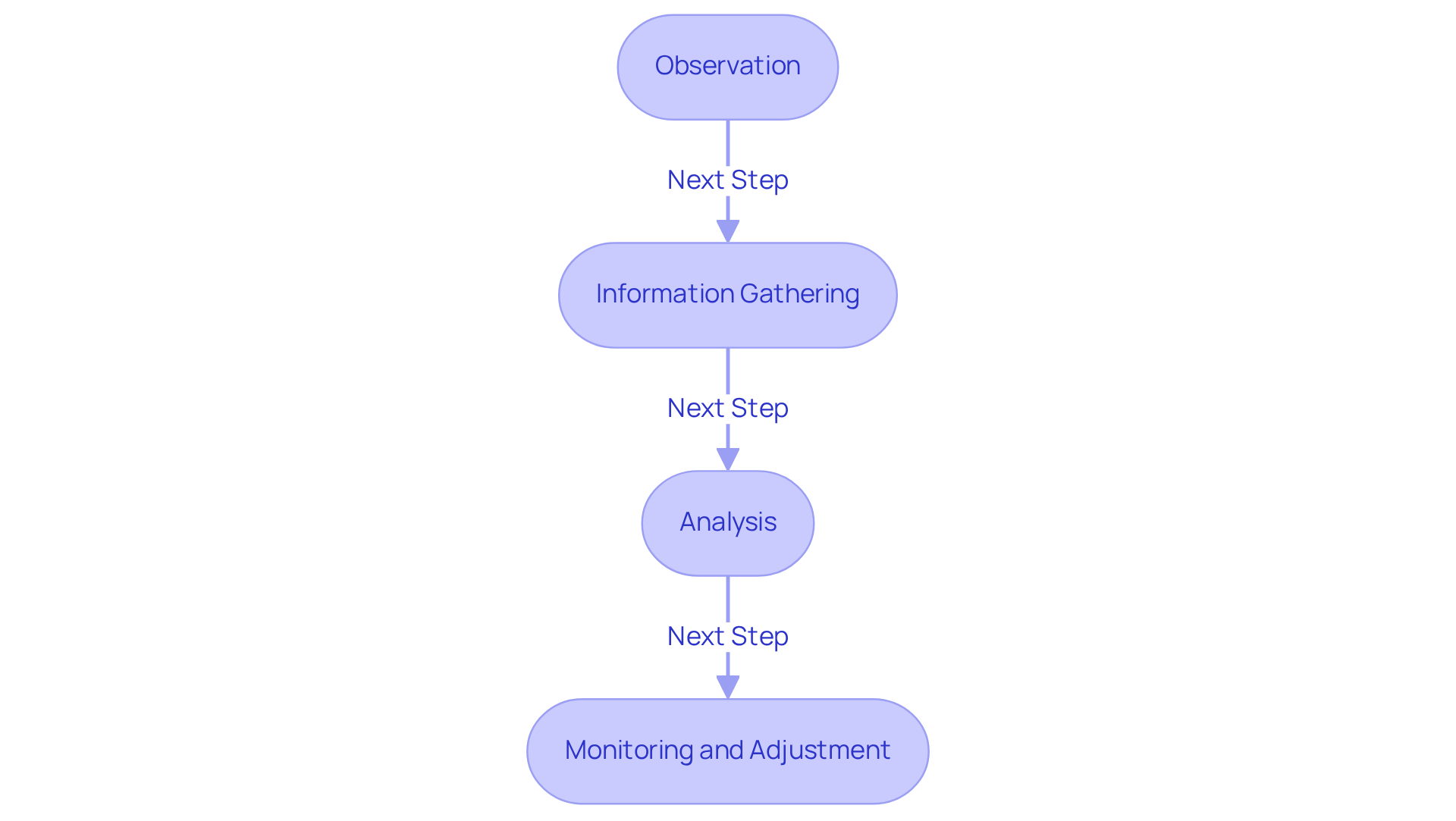
To effectively implement in , practitioners must adhere to a systematic approach that encompasses several essential steps.
Utilize the to craft strategies tailored to the individual's unique needs. Ensure that these measures are supported by empirical evidence derived from prior research or relevant case studies, reinforcing their effectiveness. For instance, , enabling individuals to function more independently.
By systematically following these steps, analysts can ensure that their interventions are grounded in empiricism ABA, which ultimately enhances the overall effectiveness of .
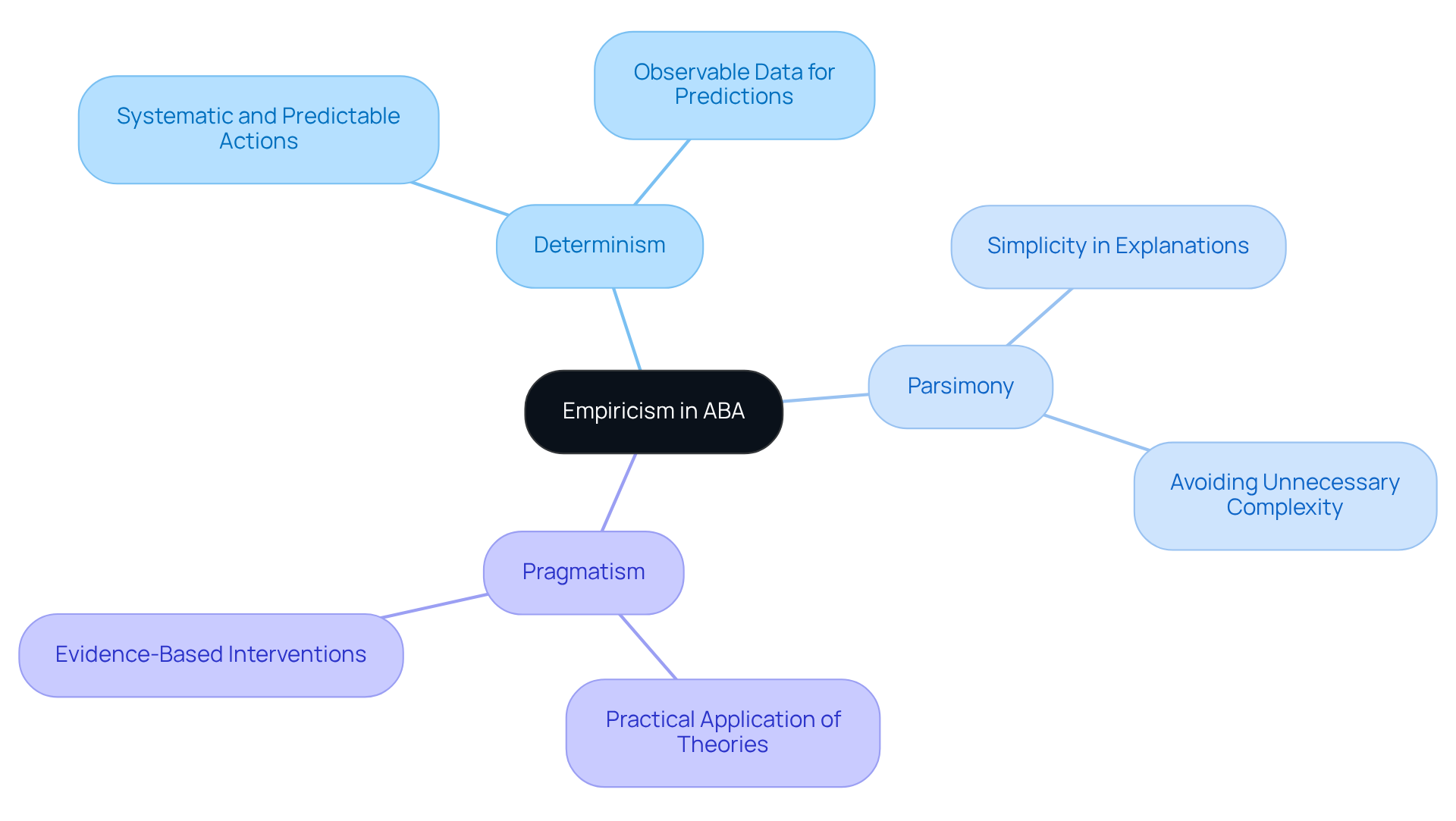
is intricately connected to several other philosophical assumptions, including determinism, parsimony, and pragmatism.
By understanding these not only stands alone as a foundational principle but also enhances the overall framework of ABA. This leads to more effective and .
Empiricism stands as the cornerstone of Applied Behavior Analysis (ABA), highlighting the critical need for knowledge to be anchored in observable and measurable evidence. This philosophy not only directs practitioners in crafting effective interventions but also guarantees that these strategies are scientifically robust and ethically sound. By prioritizing empirical data, behavior analysts are empowered to make informed decisions that foster meaningful behavioral changes, thereby reinforcing the credibility and trustworthiness of ABA as a discipline.
The article delineates the essential elements of empiricism in ABA, illustrating its integration within the seven dimensions of the practice, the importance of single-subject research designs, and the systematic approach necessary for employing empirical methods. Notable examples, such as the Early Start Denver Model, underscore the concrete advantages of evidence-based strategies, demonstrating how empiricism can significantly enhance cognitive and social outcomes for individuals, particularly those with autism. Additionally, the interconnectedness of empiricism with other philosophical assumptions—determinism, parsimony, and pragmatism—further exemplifies its foundational role in shaping effective ABA practices.
Ultimately, the dedication to empiricism in ABA not only propels the creation of customized interventions but also cultivates a culture of continuous improvement and accountability. Practitioners are urged to adopt empirical methods to refine their strategies, ensuring responsiveness to individual needs. By embracing this commitment, the field of ABA can continue to advance, delivering high-quality, evidence-based support that profoundly enhances the lives of those it serves.
What is empiricism in the context of Applied Behavior Analysis (ABA)?
Empiricism in ABA is a foundational philosophical stance that asserts knowledge is derived from observable and measurable phenomena. It emphasizes that conclusions and interventions must be based on direct observation and empirical evidence, rather than subjective opinions.
Why is empiricism important in ABA practices?
Empiricism is important in ABA practices because it ensures that interventions are testable and verifiable, relying on trustworthy information. This approach is crucial for effectively analyzing actions and outcomes.
What are the seven dimensions of ABA that relate to empiricism?
The seven dimensions of ABA are applied, behavioral, analytic, technological, conceptually systematic, effective, and generality. These dimensions illustrate how empiricism is integrated into ABA practices.
How does an analyst use empiricism when observing behaviors?
An analyst uses empiricism by gathering specific data on a child's actions in a classroom setting. This data-driven approach informs tailored actions and strategies, highlighting the role of empirical evidence in ABA.
What role do single-subject research designs play in empiricism within ABA?
Single-subject research designs are vital for assessing strategies tailored to specific behaviors, emphasizing the importance of empirical evidence in evaluating interventions.
What is the A-B-A Design, and how does it exemplify empiricism?
The A-B-A Design consists of three phases: a baseline measurement (A), the introduction of the treatment (B), and a return to baseline (A). This design exemplifies empiricism by focusing on measurable evidence to enhance the reliability and understanding of behavioral change.
Our expert recruitment strategies and AI-driven sourcing ensure that you receive top-notch candidates quickly, without compromising on quality. Whether you’re looking for BCBAs, Clinical Directors, or RBTs, we’ve got you covered.


