


Thank you! Your submission has been received!
Oops! Something went wrong while submitting the form.
June 25, 2025

Differential reinforcement is a cornerstone of Applied Behavior Analysis (ABA), presenting a strategic approach to modifying behavior by rewarding desirable actions and withholding reinforcement for undesirable ones. This method not only fosters positive behaviors in children but also significantly enhances their communication and social skills, leading to improved developmental outcomes.
However, how can practitioners effectively implement these techniques to ensure lasting behavioral change in diverse contexts?
Exploring the nuances of differential reinforcement reveals its potential to transform therapeutic practices and support individuals on their unique journeys.
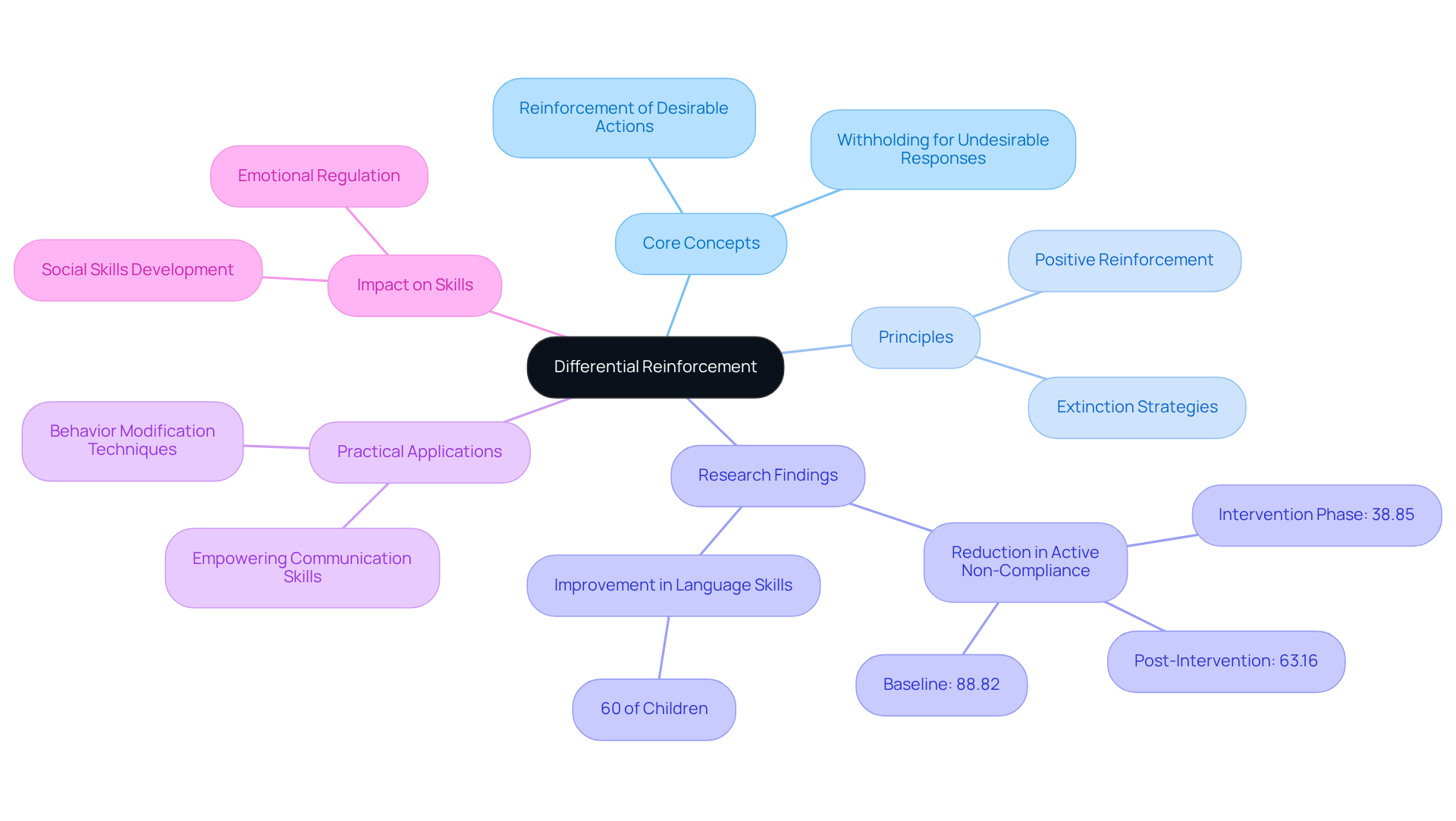
What is , which stands as a pivotal strategy within , emphasizes the importance of rewarding specific, desirable actions while withholding incentives for undesirable responses. The core principle is straightforward: actions that receive reinforcement are more likely to be repeated, while those that lack reinforcement tend to fade away over time. This technique is particularly effective in addressing challenging behaviors in children, promoting positive actions and diminishing problematic ones. For instance, when a child is rewarded for asking politely rather than shouting, the likelihood of them using polite requests increases significantly.
Current research underscores and its effectiveness across various contexts. A notable study revealed that the implementation of (DRL) resulted in a substantial reduction in active non-compliance, decreasing from 88.82% at baseline to 38.85% during the intervention phase, with a post-intervention estimate of 63.16%. This data highlights the principle that reinforcing appropriate actions can lead to significant behavioral changes.
Moreover, the integration of extinction strategies alongside what is has proven to enhance its effectiveness. For example, researchers found that combining differential incentives with extinction methods led to marked decreases in problematic behaviors, showcasing the efficacy of this strategy in modifying conduct. As noted by McCord et al., the limited success of actions (DRA) without extinction in addressing self-injury underscores the importance of these combined strategies for optimal outcomes.
In practical terms, not only modifies behaviors but also empowers children by fostering essential skills such as communication and social interaction. Research indicates that 60% of young individuals exhibit improvements in language skills through , aligning with the focus on enhancing communication abilities. By concentrating on reinforcing constructive actions, cultivates an environment where children can thrive, ultimately leading to improved developmental and social outcomes. One of the primary objectives of is to enhance social and emotional skills, further highlighting the significance of differential support in achieving these therapeutic goals. Furthermore, children engaged in for 25 to 40 hours each week demonstrate significant progress over one to three years, emphasizing the commitment required for successful .
In the realm of , the demand for Board Certified Behavior Analysts (BCBAs) is projected to surge by 25% by 2026. This statistic underscores the importance of in this field.
serves as a pivotal method for modifying behaviors, illustrating , rooted in the principles of operant conditioning, where actions are shaped by their consequences. ABA professionals leverage to create structured environments that foster . Practitioners can significantly diminish maladaptive responses by systematically reinforcing preferred actions, which highlights and makes this technique indispensable in therapeutic settings, especially for individuals with autism and other developmental disorders.
The strategic implementation of can lead to marked enhancements in social skills, communication, and overall functioning. To optimize its effectiveness, it is essential to select meaningful and desirable reinforcers that are tailored to the individual's unique needs and preferences. Furthermore, has proven adaptable across various environments, demonstrating its efficacy in mitigating challenges faced by individuals with dementia.
As the landscape of behavior analysis evolves, understanding and applying these strategies will remain critical in advancing therapeutic practices and .
Are you facing challenges in hiring qualified professionals? Consider how can facilitate your recruitment process and ensure you have the right expertise to meet these growing demands.
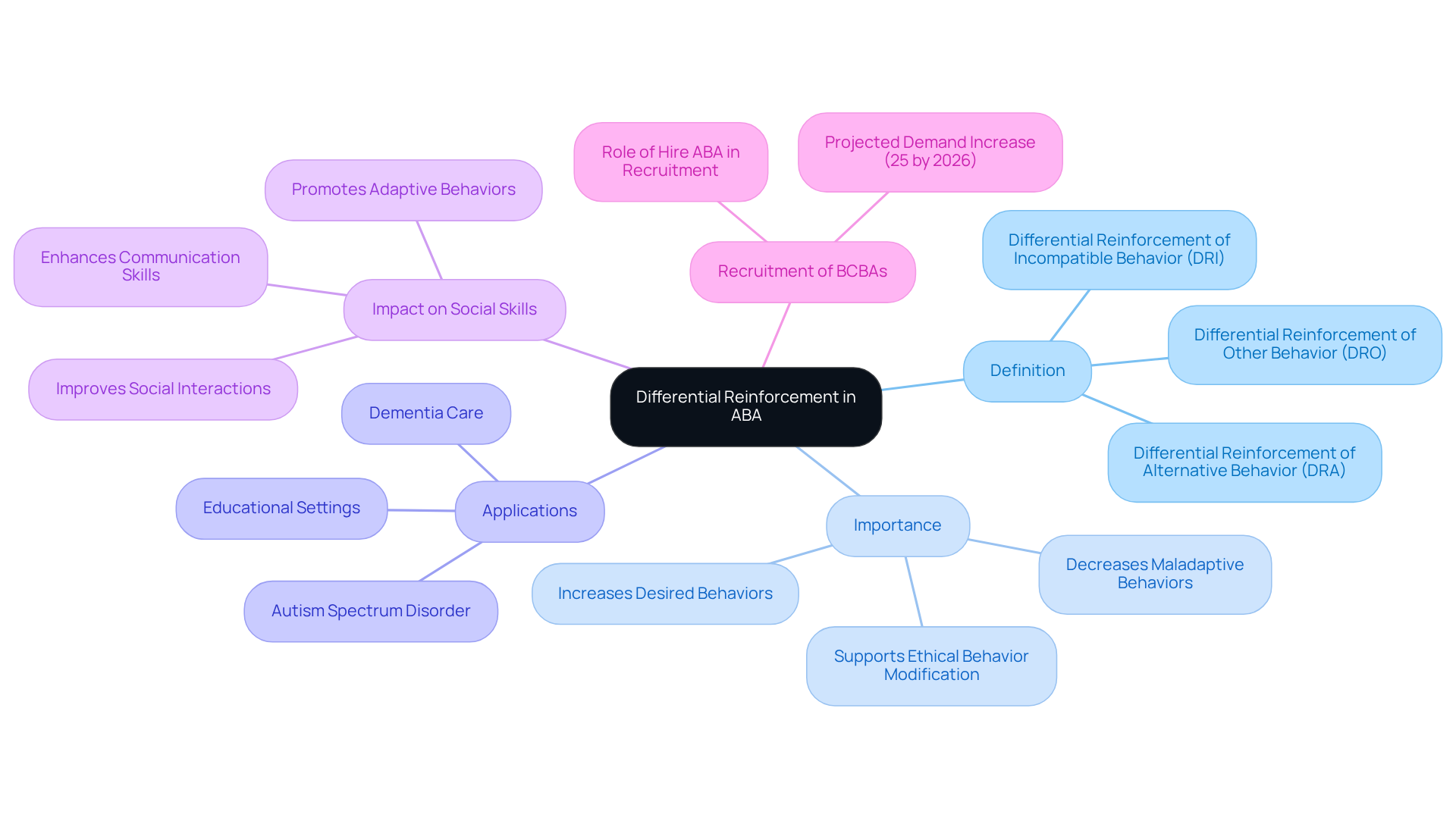
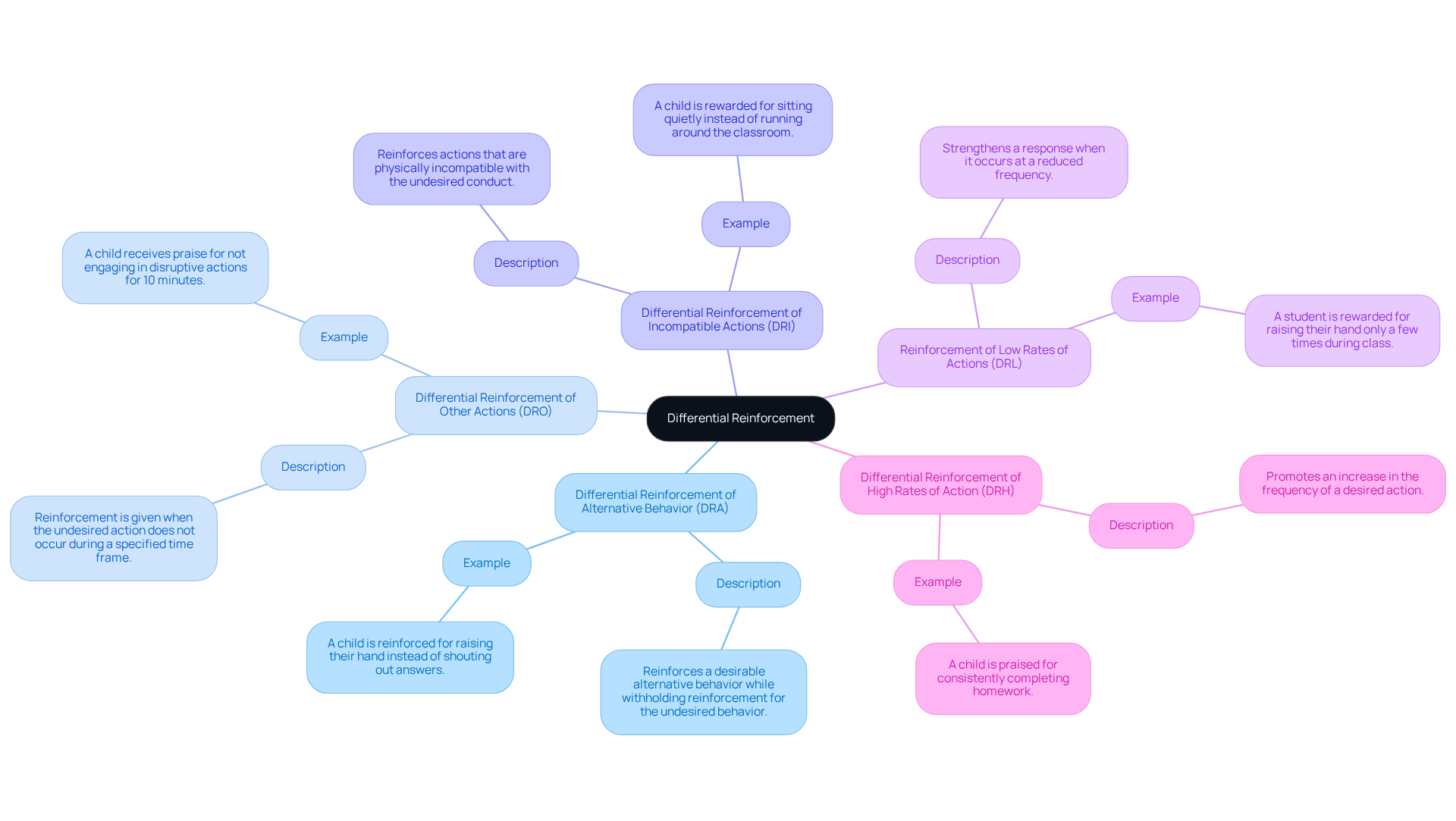
encompasses several specific strategies, each tailored to address different behavioral challenges:
Each of these differential support strategies plays a vital role in modifying actions, allowing practitioners to customize interventions to effectively address individual needs. To effectively implement successful , it is essential to understand , including its nuances in DRA, DRO, DRI, DRL, and DRH. As Timothy R. Vollmer emphasizes, 'Consistency in support is crucial for effective modification of actions.' Additionally, is vital for ensuring the successful implementation of these strategies, as informed caregivers can significantly influence their child's progress.
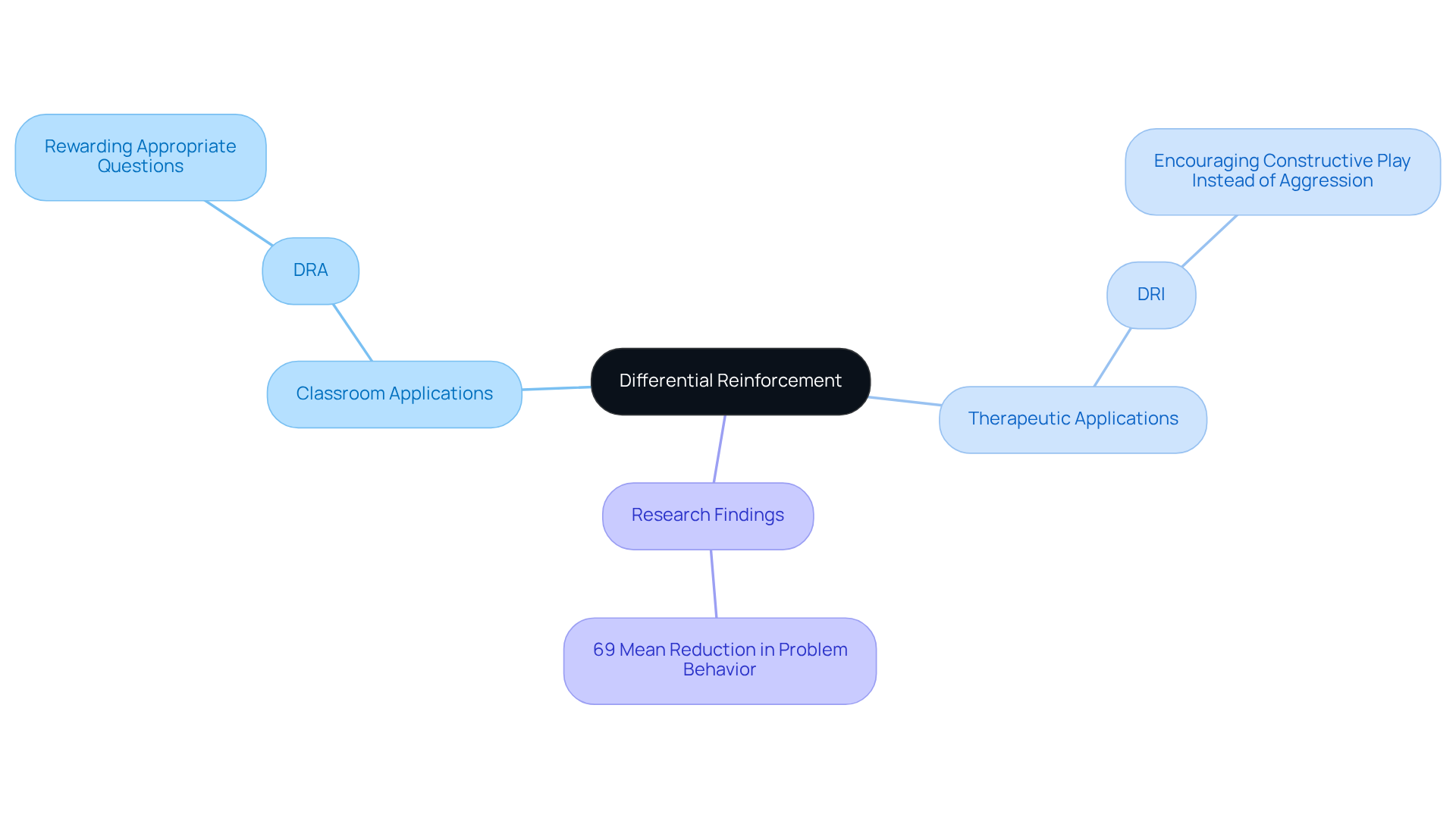
Selective encouragement serves as a flexible approach, effectively utilized across diverse settings, including classrooms and therapy sessions. Consider the classroom environment: an instructor may implement (DRA) by rewarding students for asking questions appropriately rather than disrupting the lesson. A significant case study revealed that the application of (DRO) led to a among a youth with autism, achieved by providing incentives for every 5-minute interval during which the individual refrained from such behaviors.
In therapeutic contexts, (DRI) can be employed, where a therapist encourages a young individual to engage in constructive play rather than exhibiting aggressive conduct. These instances underscore the efficacy of in fostering and enhancing across various environments. Notably, research indicates that in problem behavior through the application of stands at approximately 69%. This statistic highlights the substantial impact of these techniques on improving behavioral outcomes for children with autism.
Differential reinforcement stands as a cornerstone of behavior modification strategies, particularly within the framework of Applied Behavior Analysis (ABA). By selectively rewarding desirable behaviors while withholding reinforcement for undesirable ones, this approach not only encourages positive actions but also significantly reduces problematic behaviors. The effectiveness of differential reinforcement is underscored by research and practical applications, illustrating its vital role in fostering improvements in communication, social skills, and overall development.
Key insights reveal various methods of differential reinforcement, including:
Each method is tailored to address specific behavioral challenges. Studies indicate that these strategies can lead to substantial reductions in negative behaviors, as evidenced by impressive statistics showing improvements in compliance and communication skills among children undergoing ABA therapy. The integration of extinction strategies further enhances the efficacy of differential reinforcement, demonstrating its adaptability across different contexts and populations.
Ultimately, understanding and applying differential reinforcement is essential for those involved in behavior therapy and education. As the demand for skilled professionals in this field continues to rise, leveraging these strategies can significantly impact the lives of individuals with developmental disorders. Embracing the principles of differential reinforcement not only supports behavioral change but also empowers individuals to develop critical skills necessary for thriving in various environments.
What is differential reinforcement?
Differential reinforcement is a strategy within Applied Behavior Analysis (ABA) that focuses on rewarding specific, desirable actions while withholding rewards for undesirable responses. The principle is that actions that receive reinforcement are more likely to be repeated, while those that do not tend to fade away.
How does differential reinforcement work in practice?
In practice, differential reinforcement encourages positive behaviors by rewarding them. For example, if a child is rewarded for asking politely instead of shouting, they are more likely to use polite requests in the future.
What evidence supports the effectiveness of differential reinforcement?
Research has shown that differential reinforcement can lead to significant behavioral changes. A study found that using Differential Reinforcement of Low-Rate Actions (DRL) reduced active non-compliance from 88.82% to 38.85% during the intervention phase.
How do extinction strategies enhance differential reinforcement?
Combining differential reinforcement with extinction strategies has been shown to improve its effectiveness. For instance, researchers found that this combination resulted in notable decreases in problematic behaviors, indicating that these strategies work well together for behavior modification.
What skills can be developed through differential reinforcement in ABA therapy?
Differential reinforcement not only modifies behaviors but also helps children develop essential skills such as communication and social interaction. Research indicates that 60% of young individuals improve their language skills through ABA therapy.
What are the goals of ABA therapy related to differential reinforcement?
One of the primary objectives of ABA therapy is to enhance social and emotional skills, which underscores the importance of differential reinforcement in achieving these therapeutic goals.
How long should children engage in ABA therapy to see significant progress?
Children participating in ABA therapy for 25 to 40 hours each week can demonstrate significant progress over one to three years, highlighting the commitment needed for successful behavior modification.
Our expert recruitment strategies and AI-driven sourcing ensure that you receive top-notch candidates quickly, without compromising on quality. Whether you’re looking for BCBAs, Clinical Directors, or RBTs, we’ve got you covered.


